

Resources and Signposting
This page gathers resources, signposting and reflective tools that may be useful whether or not you become a client.
Some resources may help you understand your experience, find language for what is happening, or identify support that feels more suitable for where you are right now.
Others may offer practical starting points for burnout, neurodivergence, masking, trauma, grief, overwhelm, safety, self-trust and recovery.
You are welcome to use what feels useful and leave what does not.
No resource will fit everyone, and you do not need to work through this page in order.
If you are at immediate risk
You can bring serious, painful or difficult experiences to therapy.
This section is about immediate safety.
This website is not an emergency service.
If you are at immediate risk of harming yourself or someone else, or you do not feel able to keep yourself safe today, please seek urgent real-time support now through emergency services, your local crisis team, or someone you trust who can stay with you or help you access support.
If you need confidential listening support, Samaritans are available free, day or night, on 116 123.
If speaking on the phone feels difficult, Shout offers free, confidential 24/7 support by text. Text SHOUT to 85258 in the UK.
It can also be helpful to make a safety plan before things reach crisis point.
A safety plan is a simple, practical document that helps you recognise your own warning signs, identify what makes things worse or safer, list people and services you can contact, and set out small steps that may help you get through the next moments safely.
You may find these safety planning resources useful:
Samaritans:
Guidance on making a safety plan with warning signs, coping strategies, people to contact and ways to stay safer.
Stay Alive app
This is a UK suicide prevention app with tools and resources to help people stay safe in crisis.
Papyrus suicide safety plan
A practical personal safety plan, especially useful for young people or those supporting young people.
Access the safety plan here
If you are not at immediate risk but feel overwhelmed, distressed, shut down, burned out, frightened, numb, grieving or unsure what you need, the resources below may offer somewhere to begin.
If you feel overwhelmed, shut down or unsure where to begin
You do not need to know exactly what is wrong before looking for support.
Sometimes distress is clear and nameable.
At other times, it may show up as exhaustion, numbness, irritability, panic, shutdown, fogginess, restlessness, grief, sensory overload, difficulty speaking, or a sense that everything is too much.
If you are not at immediate risk, but you feel overwhelmed or unsure where to begin, it may help to start with something small and concrete.
You might ask yourself:
- What is the next safest thing I can do?
- Do I need food, water, rest, warmth, quiet, movement or less stimulation?
- Is there one demand I can pause, reduce or move away from?
- Is there someone safe enough to message?
- Would it help to write down what is happening instead of trying to explain it out loud?
- What usually helps me get through the next ten minutes?
This is not about fixing everything at once.
It is about lowering the immediate load enough that your body and mind have a little more room to recalibrate.
The sections below offer further ways to understand burnout, shutdown and overwhelm, along with a small number of guided practices that may help you find a starting point.
Burnout, shutdown and recovery
Burnout is not just tiredness.
It can feel like a loss of capacity, a collapse in tolerance, a deep resistance to demands, or a sense that the system can no longer keep doing what it has been doing.
For some people, burnout arrives after a period of obvious pressure.
For others, it builds slowly through years of masking, adapting, caregiving, overworking, surviving, coping or trying to function in environments that do not fit.
Burnout may show up as exhaustion, shutdown, irritability, numbness, increased sensory sensitivity, loss of motivation, greater difficulty speaking or making decisions, needing more recovery time than usual, reduced capacity for interaction or demands, or a sense of being unable to return to the version of yourself that used to keep going.
With burnout, recovery is not about doing more.
Often, the first step is reducing load, lowering demands, resting without turning rest into another task, and noticing what has become unsustainable.
This can be difficult when life still requires work, care, parenting, communication, money, appointments or decisions.
Burnout recovery often needs both internal care and external change.
Reducing demands can be difficult, stressful, or may feel impossible. It can also be shaped by privilege, support, money, work, housing, caring responsibilities, disability, safety and other people’s expectations.
Not everyone can simply step away from what is harming them.
Change does not always have to begin with a huge life shift.
Sometimes small changes in the ecosystem of experience can have knock-on effects: one less demand, one clearer boundary, one sensory adjustment, one supportive conversation, one task made easier, one expectation questioned, one pocket of recovery protected.
You might ask yourself:
- What am I still expecting from myself that no longer matches my capacity?
- What demands can be paused, reduced, delegated, delayed or made easier?
- What kinds of rest actually help, and what kinds only look like rest from the outside?
- What sensory, social or emotional load am I carrying?
- What signs tell me I am moving towards shutdown?
- What would make the next day, week or season slightly more survivable?
- What conditions would support recovery, rather than just another push through?
Resources in this section may support reflection around burnout, autistic burnout, ADHD burnout, shutdown, demand, rest, pacing and recovery.
Some of the resources below are US-based. They are included because the ideas, language and neurodivergent-affirming framing may still be useful, especially around burnout, masking, recovery and access needs.
Practical information about healthcare, education, employment rights, diagnosis routes or services may not apply directly in the UK or Wales.
Burnout Resources
These resources may be useful if you are trying to understand burnout through a neurodivergent lens, rather than a generic productivity or workplace-stress model.
Neurodivergent Insights
Research-informed, neurodivergence-affirming resources on autistic burnout, ADHD burnout and recovery. This is a useful starting point if you want clear language, diagrams and practical explanations. It includes both free and paid resources.
https://neurodivergentinsights.com/?srsltid=AfmBOooXo6wjToExMf4nZ0li7KQkgZgJN09PEcqVN0NsJ9QcWvEr4Q5X
Divergent Conversations podcast: burnout series
Episodes 113–121 explore neurodivergent burnout, recovery, and what it can mean to rebuild life after burnout. This may be useful if listening feels easier than reading, or if you want conversational, lived-experience-informed discussion. The wellness series, episodes 104–111, may also be useful.
All Brains Belong
a neurodiversity-affirming healthcare, education and community organisation with resources around neurodivergent health, burnout, chronic illness and community support. This may be especially useful for thinking about burnout in relation to bodies, systems, access needs and healthcare. Dr Mel Houser appears on the Divergent Conversations podcast in several episodes, for a conversation-based introduction to their work on the overlap of neurodivergence and health.
Guided rest, grounding and movement practices
Some people find breathing exercises helpful.
Others find them irritating, inaccessible, uncomfortable or too much to focus on.
This can be especially true when someone is already overwhelmed, burned out, shut down, dissociated, overstimulated or struggling to focus.
These resources have been chosen because different people regulate in different ways.
Some people need stillness. Some need movement.
Some people have high movement needs, while others prefer stillness, have limited mobility, or need practices that can be done lying down or seated.
Some find visualisation helpful, while others do not experience mental imagery at all.
Some people like body-based practices, while others need something more sensory, concrete or structured.
The aim is not to offer a perfect technique, but to provide a few different starting points so that people can try what fits and leave what does not.
Practices to try
- 10-minute NSDR practice — A short guided non-sleep deep rest practice. This may be especially useful if breathing exercises do not work well for you.https://www.youtube.com/watch?v=6rh0uIQajc&list=PLkJIBYfWCAqb30mjVHckP8Kd040E9N-hR&index=2
- Guided rest / body-based relaxation practice — A low-demand guided practice that may support rest, grounding and recalibration without making the breath the main focus. https://www.youtube.com/watch?v=_zPXC4ARiPA&list=PLkJIBYfWCAqb30mjVH ckP8Kd040E9N-hR&index=5&t=51s
- Progressive muscle relaxation - A guided body-based exercise that involves gently tensing and releasing muscle groups. This can be useful for people who do not find visualisation helpful, including people with aphantasia, or those who prefer something more concrete and physical. https://www.youtube.com/watch?v=1nZEdqcGVzo
- 5-4-3-2-1 grounding — A sensory grounding exercise using things you can see, feel, hear, smell and taste. This can be useful when you need to orient to the present moment without relying on visualisation. https://www.youtube.com/watch?v=30VMIEmA114&list=PLkJIBYfWCAqb30mjVHckP8Kd040E9N-hR&index=5
- Gentle Qigong practice — A slow, body-based movement practice that may support grounding, settling and reconnecting with the body without needing to talk, analyse, visualise or focus closely on the breath. This may be useful if stillness feels difficult, or if your system needs gentle movement rather than another instruction to relax. https://www.youtube.com/watch?v=6rh0uIQajc&list=PLkJIBYfWCAqb30mjVHckP8Kd040E9N-hR&index=2
Not every practice works for every person.
If a resource makes you feel more distressed, irritated, trapped or disconnected, it is okay to stop and try something else.
Neurodivergence, diagnosis and neuro-curiosity
You do not need to have a diagnosis to be curious about neurodivergence.
Some people arrive here already diagnosed.
Some are self-identifying, questioning, late-identified, waiting for assessment, unsure whether assessment is worth pursuing, or trying to make sense of a report they have already received.
Others may not identify as neurodivergent, but are beginning to notice patterns in how they process, regulate, connect, recover, sense, communicate or move through the world.
Neurodivergence can be a useful lens when it helps people understand themselves with more accuracy and less shame.
It may offer language for experiences that have previously been framed as laziness, sensitivity, inconsistency, overreaction, difficulty, failure, avoidance, being blunt or not trying hard enough.
At the same time, labels do not explain everything.
A diagnosis can bring relief, grief, validation, confusion, belonging, frustration or a sense of “now what?”
For some people, it opens doors to support.
For others, it raises new questions about identity, masking, relationships, work, education, family, sensory needs, boundaries and self-trust.
Neuro-curiosity is not about forcing yourself into a category.
It is about paying attention to the particular shape of your mind, body, nervous system and way of being in the world.
For some people, this exploration may also connect with Nick Walker’s concept of neuroqueering: questioning the norms around how people are expected to think, communicate, relate, work, feel, regulate, express themselves or move through the world.
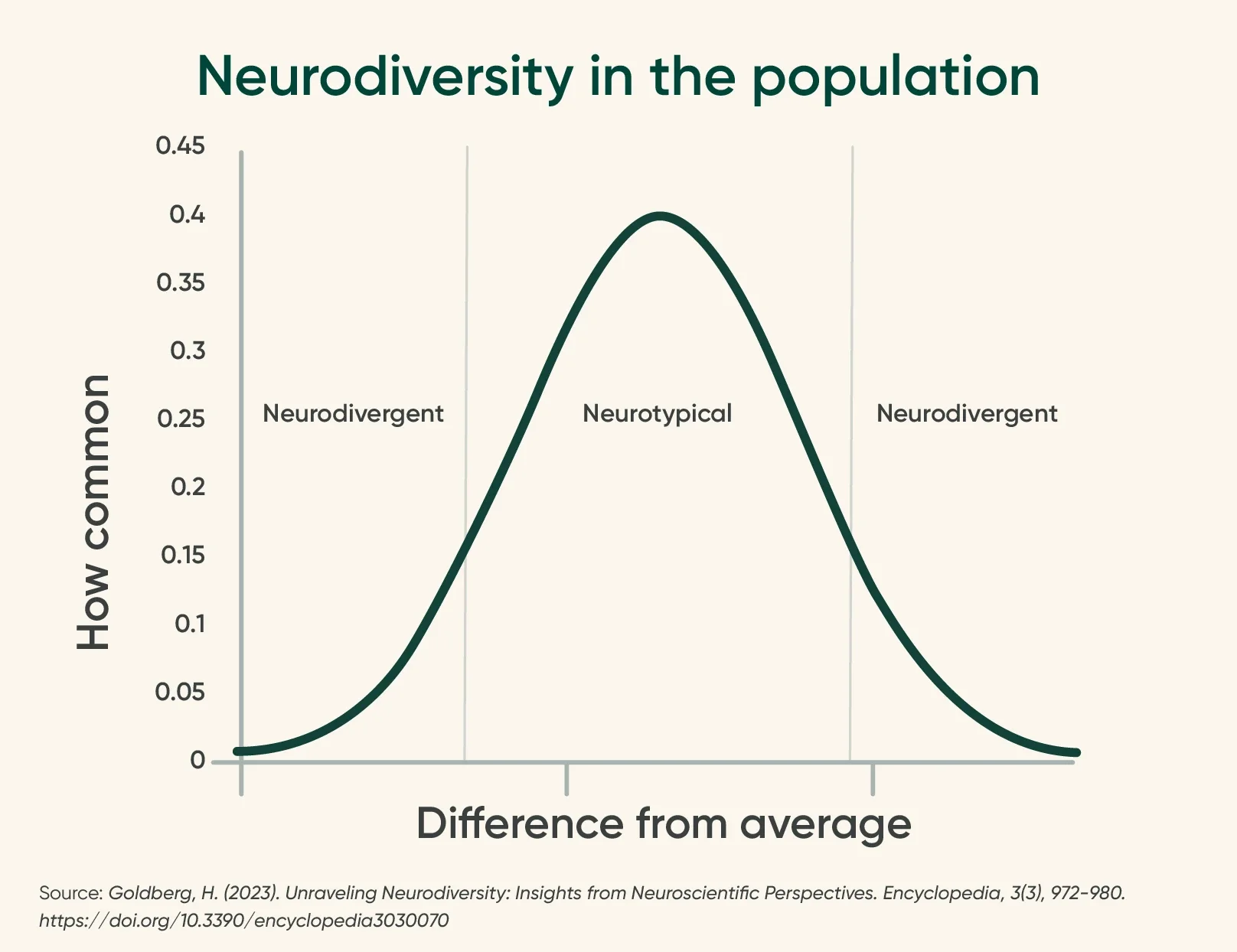
Diagnostic categories can be useful, but they are not fixed lines in nature.
Criteria change over time, and the boundary between “inside” and “outside” a diagnosis can move.
This means that some people may sit close to a diagnostic threshold without meeting criteria, while still finding that many typical environments do not fit them well.
Others may only become recognised or diagnosable when criteria, awareness or assessment practices change.
This has mattered especially for those whose experiences have historically been under-recognised, misread or punished, including women and girls, people of colour, LGBTQIA+ people, gender non-conforming people, and those whose distress or difference has been masked, internalised, or explained through other labels.
This is one reason neuro-curiosity matters.
The question is not only “Do I meet criteria?”
It is also:
- What supports, environments, relationships and ways of living actually fit the way I function?
- What patterns have I noticed across my life?
- What environments make things easier or harder?
- What have I been calling “failure” that might actually be mismatch, overload or unsupported need?
- What have I learned to mask, suppress or explain away?
- Which expectations have I been trying to fit, and who decided they were “normal”?
- What would become possible if I understood difference as information rather than failure?
- What kind of support, language or community feels useful?
- Would assessment help me, or am I mainly looking for self-understanding?
- What changes when I understand myself with more context?[
Neurodivergence resources
The resources in this section may support exploration around autism, ADHD, AuDHD, Tourette’s syndrome, tic disorders, late recognition, diagnosis, self-identification, masking, sensory needs, executive functioning, communication, relationships and self-understanding.
- Neurodivergent Insights - Accessible, neurodivergence-affirming resources on autism, ADHD, AuDHD, burnout, masking, sensory needs, relationships and self-understanding. This may be a useful starting point if you want clear language, diagrams and practical explanations.
- Embrace Autism — A neurodivergent-led website with articles and screening tools related to autism. Screening tools are not the same as diagnosis, but they may support reflection, pattern-spotting or preparation for assessment.
- Autistic Self Advocacy Network — Autistic-led information and advocacy resources. This may be useful for exploring autism from a rights-based, neurodiversity-affirming perspective. https://autisticadvocacy.org/
- ADHD UK — UK-based information and support around ADHD, including diagnosis, medication, rights, workplace issues, education and everyday life. https://adhduk.co.uk/
- ADHDadultUK — A UK charity and peer support organisation for adults with ADHD, with information, resources, a podcast and community support. This may be useful for adults exploring ADHD, diagnosis, medication, work, relationships or daily life. https://www.adhdadult.uk/
- Tourette’s Action — UK-based information and support around Tourette syndrome and tic disorders. This may be useful for people exploring tics, diagnosis, support, education, workplace issues or the overlap between Tourette’s, ADHD, autism, OCD and anxiety. https://www.tourettes-action.org.uk/
- National Autistic Society — UK-based information around autism, diagnosis, support, rights and services. Some people find the information helpful as a practical starting point, especially around assessment routes and support options. https://www.autism.org.uk/
- Nick Walker: Neuroqueer: An Introduction — An introduction to neuroqueering as a concept and practice. This may be useful if you are interested in questioning neuronormative expectations around how people are supposed to think, communicate, relate, regulate, express themselves or move through the world. https://neuroqueer.com/neuroqueer-an-introduction/
Masking, identity and self-trust
Unmasking is not always safe, possible or desirable in every context.
Sometimes the work begins with noticing: where masking protects, where it costs too much, where it has become automatic, and where a little more choice might be possible.
Masking can affect self-trust.
When you have spent years monitoring, editing or overriding yourself, it can become harder to know what you feel, need, prefer, notice or believe.
Rebuilding self-trust may involve paying attention to small signals, experimenting with safer forms of expression, and noticing which people, places and conditions allow more of you to exist without performance.
Values mapping can be useful when masking or long-term adaptation has made it harder to know what matters to you.
This might involve gently identifying the values, needs, principles or qualities that help guide your decisions: not as another set of rules to perform, but as a way of noticing what still feels meaningful, steadying or true.
For some people, values mapping can support a return to self-trust by making choices feel less driven by fear, expectation, people-pleasing or survival.
Parts work can also be a useful way of exploring masking, self-trust and identity.
Rather than treating masking, people-pleasing, shutdown, anger, avoidance or over-functioning as problems to get rid of, parts work invites curiosity about what different parts of a person may be trying to protect, express or prevent from happening.
This can be especially helpful when there are conflicting needs: the part that wants to be visible and the part that needs to hide, the part that wants rest and the part that keeps pushing, the part that longs for connection and the part that does not feel safe.
A neuro-affirming approach to parts work should not treat neurodivergence itself as a “part” to be healed or removed.
A neuro-affirming approach to parts work needs care.
Autism, ADHD or other neurotypes are not problems to be healed, removed or transformed into something more acceptable. A person’s neurodivergence is not an exile, a protector, a burden part or a wound.
At the same time, people may experience parts, modes or internal conflicts that feel closely connected with neurodivergent experience. For example, someone may recognise a highly impulsive, novelty-seeking or restless part that they associate with ADHD, or a part that longs for sameness, predictability, sensory safety or withdrawal that they associate with autism.
These parts do not need to be shamed or forced into compliance. In parts work, all parts are approached as having a reason, a role and both original and protective purposes, even when their strategies have become costly or extreme.
The work is not about getting rid of these parts. It is about listening to them, understanding what they are trying to protect, validating the need underneath, and gently helping them find safer, less exhausting ways to support the person.
Used carefully, parts work can help explore masking, shame, fear, exhaustion, impulsivity, shutdown, avoidance, over-functioning, people-pleasing, survival responses and unmet needs, while still respecting neurodivergence as part of the person’s natural way of being.
You might ask yourself:
- What parts of myself have I learned to hide, soften, exaggerate or suppress?
- Where does masking still protect me?
- Who or what am I performing for?
- What signals do I override in order to appear fine?
- What signals do I override in order to appear fine?
- What would it mean to have more choice around visibility, rather than forcing myself to be fully masked or fully exposed?
- What values, needs or principles do I want to guide my choices, rather than only fear, expectation or survival?
Masking and identity resources
These resources may support reflection around masking, camouflaging, identity, self-trust, values and parts work.
- National Autistic Society: masking — A practical explanation of autistic masking, why people may mask, and the possible impact on mental health, identity and diagnosis. This may be useful as a clear starting point. https://www.autism.org.uk/advice-and-guidance/behaviour/masking
- Nick Walker: Neuroqueer: An Introduction — An introduction to neuroqueering as a concept and practice. This may be useful if you are interested in questioning neuronormative expectations around how people are supposed to think, communicate, relate, regulate, express themselves or move through the world. https://neuroqueer.com/neuroqueer-an-introduction/
- Divergent Conversations podcast — A conversational resource exploring neurodivergent experience, masking, identity, burnout, diagnosis and recovery. This may be useful if listening feels easier than reading. https://www.divergentpod.com/
- Values mapping / values clarification worksheet — A free ACT-informed worksheet from Russ Harris / The Happiness Trap for exploring what matters to you and how closely different areas of life reflect those values. This may be useful if masking, burnout or long-term adaptation has made it harder to know what currently guides your decisions, and what you want to guide them. https://www.actmindfully.com.au/wp-content/uploads/2019/07/Values_Checklist_-_Russ_Harris.pdf
- IFS Institute: What is Internal Family Systems? — An introduction to Internal Family Systems, a therapeutic model often associated with “parts work.” This may be useful if you want to understand the basic idea that different parts of a person can hold different roles, needs, fears or protective strategies.
https://ifs-institute.com/resources/articles/internal-family-systems-model-outline
- IFS and Neurodivergence resources — A neurodivergence-focused resource collection exploring how Internal Family Systems and parts work may be adapted for autistic, ADHD and otherwise neurodivergent people. This may be useful if you want parts work explained through a more neurodivergent-affirming lens.
https://ifsneurodiversity.substack.com/p/the-double-empathy-problem-when-understanding
https://www.stroudtherapy.com/reflections/ifs-and-neurodivergence
Trauma, safety and grounding
Trauma work needs care, pacing and respect.
My approach to trauma is held within a phased model: safety and stabilisation, processing, and integration.
These phases are not always neat or linear. People may move back and forth between them, and different parts of the work may need different kinds of attention at different times.
Even so, trauma work often begins with creating enough safety, steadiness and trust for the work to have somewhere to land.
Safety does not only mean learning grounding techniques.
For many people, especially neurodivergent clients, safety is relational. It may involve feeling less likely to be misread, pathologised, patronised or forced into a normative idea of what trauma work should look like.
It may involve working through past experiences of misattunement, building trust in the therapeutic relationship, and finding out what actually helps your nervous system feel more able to stay present.
I am mindful that neurodivergent people may have different needs around directness, detail, pacing, sensory load, emotional processing, language, uncertainty and control.
Some people need to approach trauma slowly and indirectly.
Others may want or need to speak more directly about what happened.
I try not to assume that one way is safer, healthier or more appropriate for everyone.
Trauma work here is adapted collaboratively.
It may include talking, grounding, psychoeducation, parts work, creative methods, Gestalt-informed work, emotion-focused exploration, body-based noticing, mapping patterns and thresholds, and, where appropriate, reprocessing techniques.
The relationship remains central: not as a technique, but as part of what makes deeper processing possible.
I also pay attention to the overlap between trauma and neurodivergence.
Neurodivergent people may be more exposed to misattunement, exclusion, coercion, sensory overwhelm, bullying, invalidation or systems that do not understand their needs.
They may also face barriers to support afterwards, especially if distress is misunderstood, minimised, masked or explained through the wrong lens.
Trauma responses can also become tangled with coping strategies that once helped a person survive.
This might include substance use, dissociation, avoidance, overworking, people-pleasing, shutdown or staying constantly busy.
These strategies may have made sense at the time, even if they later became costly.
The work is not about shame or judgement, but about understanding what a strategy has been doing, what it has protected, and whether other forms of safety, regulation or choice are now possible.
You do not need to tell the whole story before you are ready.
You also do not need to avoid directness if directness helps you feel more real, clear or in control.
The work is about finding a pace and shape that supports safety, agency, processing and integration.
Trauma can involve very hard things, but it is not something I approach as frightening, untouchable or beyond hope.
I believe people can recover from profoundly difficult experiences, especially when the work is paced, relational, respectful and adapted to the person rather than forced into a standard shape.
The aim is not to erase what happened or become untouched by it.
It is to support more safety, choice, connection and integration, so that what happened does not have to organise as much of the present.
You might ask yourself:
- What helps me feel safe enough to begin?
- What makes me feel misread, exposed, rushed or shut down?
- Do I need to approach this directly, indirectly, creatively, bodily or in smaller pieces?
- What has helped me survive, and what is it now costing me?
- What parts of me are trying to protect, avoid, remember, explain or stay in control?
- What does my nervous system need before deeper processing is possible?
- What would integration look like, not as “getting over it”, but as carrying this differently?
Trauma, safety and grounding resources
Resources in this section may support understanding trauma, safety, stabilisation, processing and integration.
For practical grounding or regulation exercises, you may also want to return to the Guided rest, grounding and movement practices section above.
The overlap between neurodivergence and trauma is important, but not always well represented in public resources. I plan to explore this more fully in the Living Essays section.
- Babette Rothschild: Applying the Brakes — A trauma psychoeducation video about pacing, safety and control. Rothschild uses the metaphor of learning to apply the brakes before pressing the accelerator: before going deeper into traumatic material, it helps to know how to slow down, pause, return to the present and manage overwhelm.
This can help make trauma work feel less like opening something uncontrollable and more like learning how your system responds, why pacing matters, and how you can build trust in your ability to come back down again.
https://www.youtube.com/watch?v=LhuzpUlaX_k&list=PLkJIBYfWCAqajnbCaUnPhlcwSz1c-YsMe&index=9
- PTSD and the brain — An illustrated video explaining how PTSD can affect the brain, nervous system, memory and threat responses. This may be useful if you want to understand what is happening “under the hood,” especially if trauma responses have felt confusing, shameful or out of proportion to the present moment. https://www.youtube.com/watch?v=yb1yBva3Xas&list=PLkJIBYfWCAqajnbCaUnPhlcwSz1c-YsMe&index=10
- Window of tolerance — A clear video explaining why people can move between feeling overwhelmed, activated or panicky, and feeling numb, foggy or shut down.
This may be useful for understanding trauma-related hyperarousal and hypo-arousal, and for noticing when your system may need safety, grounding, rest or support.
Some advice for shutdown focuses on gentle upregulation. This may help with some trauma-related hypo-arousal, but may not fit shutdown linked to neurodivergent burnout, demand overload, sensory depletion or long-term exhaustion. If that feels more accurate, the burnout resources above may be a better starting point.
https://www.youtube.com/watch?v=TNVlppGz0zM&list=PLkJIBYfWCAqajnbCaUnPhlcwSz1c-YsMe&index=18
- Working with traumatic nightmares — A practical video for people who experience trauma-related nightmares or distressing dreams. This may be useful if nightmares leave you feeling frightened, activated, disoriented or pulled back into the past. It offers a way to respond to nightmares without needing to go straight into the full trauma story.
https://www.youtube.com/watch?v=lv38dzpcxfA&list=PLkJIBYfWCAqajnbCaUnPhlcwSz1c-YsMe&index=7
Grief, loss and transition
Grief is not only about bereavement.
We can grieve many kinds of loss, including:
- a person, relationship, home, role or place
- an identity, capacity, future or way of life
- a version of ourselves we can no longer return to
Some grief is recognised by other people.
Some is private, complicated, delayed, disenfranchised or hard to explain.
This can be especially true when the loss involves identity, estrangement, burnout, diagnosis, illness, family rupture, belonging, time lost to survival, or a life that no longer fits.
Grief does not always look like sadness.
It can feel like numbness, anger, guilt, relief, anxiety, exhaustion or disconnection.
It can also affect your capacity, your relationships, your sense of self, and your ability to imagine the future.
When grief is misunderstood
For neurodivergent people, grief may be experienced, expressed or processed in ways that others do not always understand.
Some people feel grief intensely but struggle to show it outwardly.
Others may appear calm, blunt, practical or information-focused while feeling overwhelmed inside.
Directness can be mistaken for not caring.
Delayed processing, alexithymia, or a need to think things through carefully can be mistaken for coldness.
Information-gathering can also be part of grief.
Wanting to understand the details, systems, medical information, practical implications, or “how it works” is not necessarily avoidance.
It may be a deep need for context: a way of orienting, reducing uncertainty, making sense of what has happened, and beginning to process the loss.
Grief as transition
Loss often involves transition.
And transitions can be especially difficult, disorienting or energy-costly for many neurodivergent people.
What has changed may not only be emotional.
It may affect:
- routine and sensory safety
- roles, relationships and responsibilities
- identity, future plans and the predictability of everyday life
When grief does not look the way other people expect, it can lead to shame, isolation, or the feeling that you are grieving “wrong.”
You are not grieving wrong because your grief is different from other people’s.
Grief does not have to look recognisable to be real.
You might ask yourself:
- What have I lost that other people may not recognise as a loss?
- Am I being expected to move on before I am ready?
- How is this changing my identity, my future, or my everyday life?
- What do I need in order to process this loss?
- What support, language or witness might help this loss feel less invisible?
Grief, loss and transition resources
Resources in this section may support reflection around grief, bereavement, transition, identity loss, disenfranchised grief and finding support when loss is hard to name or explain.
Cruse: Neurodiversity and grief — A UK bereavement resource specifically about neurodivergence and grief. This may be useful if your grief does not look the way other people expect, or if you want language around different ways of processing, expressing or responding to loss.
https://www.cruse.org.uk/understanding-grief/grief-experiences/neurodiversity-and-grief/
Divergent Conversations: Autistic Grief and Wellness — A conversation about autistic grief, pet loss, emotional intensity, attachment, ritual, community, boundaries and self-compassion.
This may be useful if you want to hear grief discussed through a neurodivergent lens, especially where loss feels intense, misunderstood, sensory, relational or hard to explain.
The episode notes say it includes discussion of pet loss, suicidality, collective trauma and school violence, so it may be worth checking whether you feel in the right place to listen.
https://www.divergentpod.com/blog/ep-105
Divergent Conversations: Autism and Pregnancy Loss — A conversation with Dr Kiley Hanish about autistic grief, pregnancy loss, identity, the medical system, sensory overwhelm, shutdown, rituals and the need for clear information during loss.
This may be especially useful for people whose grief has been misread because they needed directness, practical detail, context or guidance before they could process emotionally.
The episode is focused on pregnancy loss, but the discussion also speaks more broadly to autistic grief and how loss may be experienced or expressed differently.
https://www.divergentpod.com/blog/ep-22
Cruse Bereavement Support — UK bereavement support offering information, a helpline and local support. This may be useful if you want to speak to someone, understand grief responses, or find bereavement support after someone has died.
AtaLoss — A UK-wide bereavement signposting website that helps people find support by type of loss, location, age and circumstances. This may be useful if you are looking for something more specific than general grief information.
The Good Grief Trust — A UK organisation offering bereavement resources and practical signposting, run by people with lived experience of grief and loss. This may be useful if you want a broad starting point for finding support after a death, especially from a resource shaped by people who understand bereavement personally.
Practical support and advocacy
Sometimes support needs to be practical.
Reflection, therapy and self-understanding can matter deeply, but they do not replace access, adjustments, money, housing, safety, communication support, workplace changes, education support, healthcare, benefits advice or advocacy.
Practical support can be especially important when distress is being made worse by systems that do not fit: workplaces, schools, universities, healthcare settings, benefits processes, family systems, housing situations, caring responsibilities or inaccessible environments.
For many neurodivergent people, especially those who are high-masking or late-identified, asking for support can feel complicated.
Years of masking, internalised ableism, imposter syndrome, or being told “but you have always coped” can make it hard to recognise that support is allowed, needed or deserved.
Sometimes diagnosis, burnout or a period of life change can bring a sudden loss of capacity.
This is not “becoming your diagnosis” or making things up.
It may be the result of finally understanding what things have cost, noticing needs that were previously overridden, or no longer being able to keep white-knuckling your way through environments that do not fit.
Needing support does not mean you have failed.
Your experience is real, even if you have looked capable from the outside.
This section is not a complete directory.
It is a starting point for finding support around access needs, adjustments, rights, work, education, disability, neurodivergence and everyday life.
You might ask yourself:
- What practical barrier is making life harder than it needs to be?
- What adjustment would reduce unnecessary friction?
- Is there a system, workplace, service or environment I am trying to survive without enough support?
- What do I need written down, clarified or made easier?
- Would an advocate, union, support worker, GP, charity, adviser or trusted person help me navigate this?
- What am I entitled to ask for, even if I have learned not to expect support?
- What would make this situation more accessible, safer or more sustainable?
- What support might I have dismissed because I assumed I was not “disabled enough,” struggling enough, or deserving enough?
Practical support and advocacy resources
Resources in this section may support practical next steps around rights, access, work, education, disability, benefits, neurodivergence and everyday support.
Some resources may be UK-wide, while others may vary depending on where you live.
This list is not exhaustive. It is intended as a jumping-off point for further exploration and signposting.
Access to Work — A UK government scheme that can help people get or stay in work if they have a physical or mental health condition or disability.
This may include practical workplace support, mental health support at work, or communication support for interviews.
https://www.gov.uk/access-to-work
ACAS: Reasonable adjustments at work — UK information about employment rights, workplace problems, reasonable adjustments, discrimination and resolving issues at work.
This may be useful if work is becoming unsustainable, inaccessible or unnecessarily difficult because of disability, neurodivergence, health, sensory needs or mental health, or if you need clearer information before speaking to an employer, HR department or union.
https://www.acas.org.uk/reasonable-adjustments
https://www.acas.org.uk/reasonable-adjustments/adjustments-for-neurodiversity
Citizens Advice — UK advice around benefits, work, housing, debt, discrimination, consumer issues and legal rights.
This may be useful where distress is linked with practical, financial, housing or employment pressure.
https://www.citizensadvice.org.uk/
ADHD UK — UK-based ADHD information and signposting, including resources around diagnosis, medication, work, education, rights and everyday life.
https://adhduk.co.uk/reasonable-adjustments/
Tourette’s Action — UK-based information and support around Tourette syndrome and tic disorders, including diagnosis, education, employment and support.
https://www.tourettes-action.org.uk/
National Autistic Society — UK-based information around autism, diagnosis, rights, services, employment, education and support.